
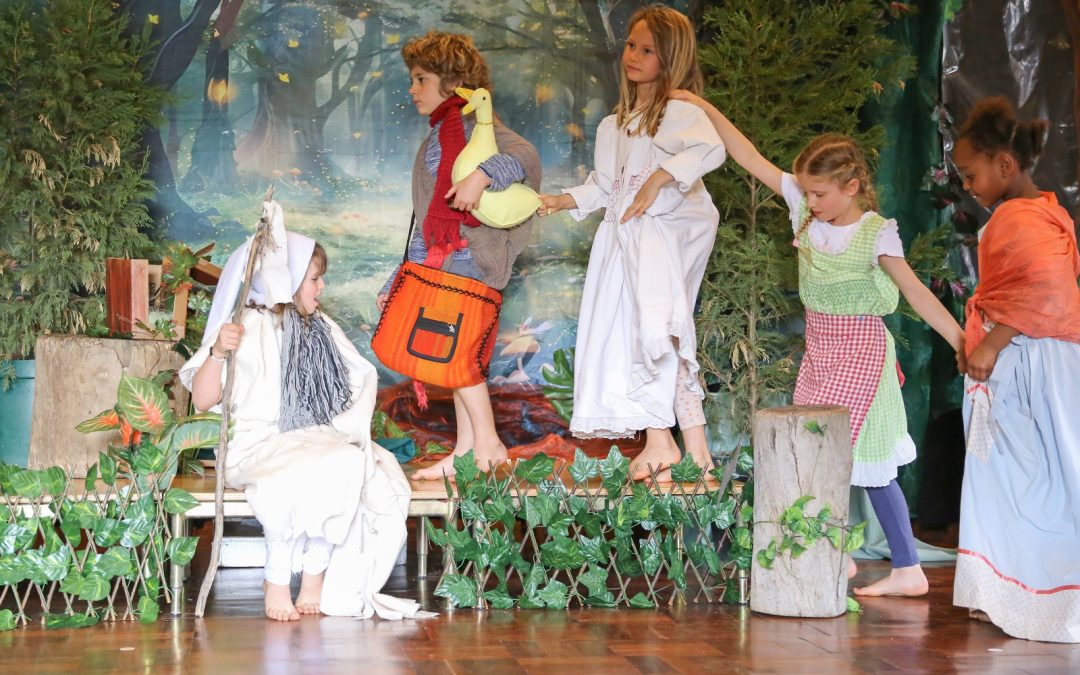
Why Class Plays Matter in Waldorf Education
More than a performance — part of the curriculum
In Waldorf schools, the class play is never simply a show at the end of term. It is a carefully held part of the curriculum and a rich learning process that unfolds over weeks and months. Through story, movement, speech, collaboration and art, children are invited to grow in ways that academic lessons alone cannot reach.
One of the most visible outcomes of a class play is how it strengthens teamwork. From the early years, where children may speak or move together in unison, to the upper grades, where they manage complex scenes, cues and partner work, the play asks the class to function as a whole. Children learn to listen closely to one another, to take responsibility for their role within the group, and to recognise that the success of the play depends on everyone. Reflection is often part of the process, with classmates naming one another’s contributions and strengths.
Class plays also deepen learning. The stories chosen are closely aligned with the curriculum: Norse mythology in Class 4, Greek myths in Class 5, historical and literary themes in the upper school. Rather than studying these subjects from a distance, children step inside them. By embodying characters, speaking the language of the time, and moving within the story, academic content becomes lived experience. This kind of learning is memorable, meaningful and rooted in understanding rather than recall.
Confidence is another quiet but powerful outcome. Teachers cast with great care, often giving a reserved child a role that gently stretches them, or guiding a more confident child towards greater sensitivity and restraint. Over time, children discover that they can stand in front of others, speak clearly, and be seen. The courage developed through this process often carries into classroom participation, friendships and later challenges.
Creativity is woven throughout the work of a class play. Children contribute ideas for movement, staging, props, costumes and problem-solving. Live theatre demands adaptability and presence; if something goes wrong, the group must respond together in the moment. These experiences cultivate imagination, flexibility and initiative — capacities that remain relevant far beyond the school years.
Perhaps most importantly, class plays build community. They bring the class together with a shared purpose, invite parents to witness their children in a new light, and draw the wider school community into a common experience. These gatherings strengthen relationships and create a sense of belonging that cannot be measured but is deeply felt.
Above all, class plays remind us that education is not only about outcomes and results. It is about experience, connection and growth. The final performance is simply the visible moment of a much longer and richer journey — one that shapes the child socially, emotionally and creatively, as well as intellectually.
For more on the meaning behind Waldorf class plays, we’re sharing two insightful articles: