The Hidden Magic of Boredom: Why Your Child Needs Time to Simply Be
In today’s fast-paced world, childhood is often hurried. Children are rushed from one activity to the next, their free time filled with screens, structured lessons, and endless stimulation. Boredom, once a natural part of growing up, is now seen as a problem to solve. But at The Waldorf School and Kindergarten, we believe something different:
Boredom is not a failure of engagement. It is a gift. A superpower in disguise.
Boredom as Fertile Ground
In Waldorf education, we hold space for boredom—not as a void to be filled, but as fertile ground where imagination, self-direction, and creativity begin to grow. Our educational philosophy is rooted in the understanding that children thrive when given time and space. Time to wonder. Time to create. Time to simply be.
What Happens When a Child is “Bored”?
Instead of seeking instant entertainment, children begin to look inward.
They invent, explore, build, daydream, and create.
They develop problem-solving skills and learn how to entertain themselves.
They start to understand time management and decision-making.
They grow in emotional resilience and self-regulation.
They reconnect—with themselves, others, and the natural world.
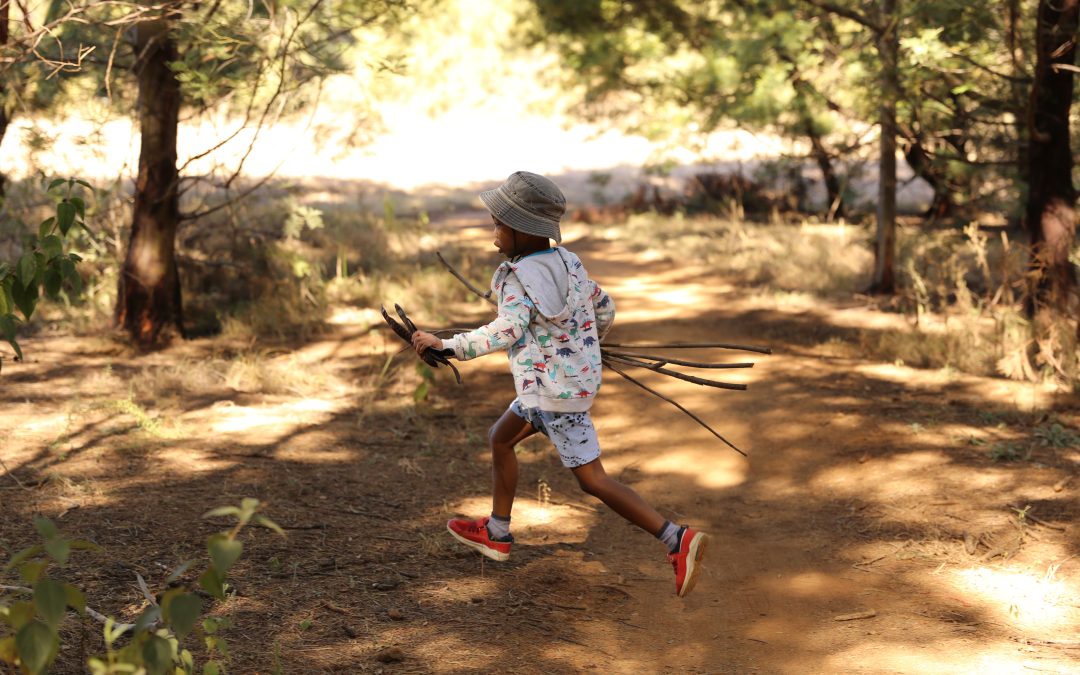
In the Kindergarten years, a stick becomes a fishing rod, a pinecone a pet, and a puddle a potion. In Primary School, a quiet moment leads to a story, a drawing, a plan, or a big idea. These are not wasted moments—they are the heart of healthy development.
The Risk of Replacing Boredom with Screens
When boredom is quickly filled with technology, children lose the opportunity to develop these essential inner resources. The dopamine-driven rewards of screens dull motivation and make real-world experiences seem… well, boring. It can take months for a child to rediscover joy in simple, soulful play.
That’s why Waldorf education honours unstructured time. Our classrooms (and outdoor spaces) are designed to leave room for stillness and play, rhythm and wonder. In this slower space, children aren’t rushed or overscheduled. There are no exams in the primary school years, and we don’t push early academics. Instead, we allow children to unfold at their natural pace—emotionally, socially, and intellectually.
Less is More
We see, time and again, that less really is more. Children don’t need more stimulation—they need more space. They don’t need to be constantly taught—they need to be seen, supported, and given time to discover.
In this world of performance and pressure, the simple gift of being allowed to be a child is rare. And yet, it is the most important thing we can offer.