Why We Don’t Grade Children or Give Exams in Primary School
A reflection on stress, learning, and what children really need
In a recent talk, Dr Gabor Maté — renowned physician and expert in childhood development and trauma — highlighted something many of us have come to accept without question: that children are constantly being evaluated.
Grades, marks, tests, behaviour points, rewards, stickers — all well-intentioned, but part of a system that quietly tells young children:
“Your worth is based on how well you perform.”
“You are only safe or praised when you impress.”
Dr Maté points to research showing that even adults experience elevated stress hormone levels when they are being evaluated — even in low-stakes experiments. For children, whose brains are still developing and whose sense of self is being shaped every day, this kind of pressure can be profoundly damaging.
The Pressure to Perform
Children today are growing up in a world that often measures their value by performance, productivity, and compliance. We start earlier and earlier:
- Children as young as four are being tested on reading and numeracy.
- Behaviour is constantly managed and assessed.
- Creativity and curiosity are often pushed aside for measurable outcomes.
But studies consistently show that early academic pressure does not improve long-term performance. In fact, a 2015 study from Stanford University found that children in play-based early education settings outperformed their peers later in school — not because they started academics earlier, but because they developed stronger executive functioning, social skills, and motivation.
A Different Way: The Waldorf Approach
At our Waldorf school, we take a fundamentally different view of learning in childhood. We do not give exams or grades in primary school, and here’s why:
1. We honour the natural stages of development
Waldorf education is based on the understanding that children go through clear developmental phases. In the early years and primary school, learning should be sensory-rich, imaginative, and movement-based. Formal assessment and abstract academic tasks are introduced only when the child is developmentally ready.
2. We nurture intrinsic motivation
When children are not graded or ranked, they are free to explore, question, and learn without fear of failure. They are motivated by interest and curiosity, not by external rewards or punishment. This lays the foundation for a lifelong love of learning.
3. We observe, not measure
Assessment in Waldorf schools is individualised and observational. Teachers spend years with the same group of children, getting to know each one deeply. They track progress through daily engagement, storytelling, artistic work, and practical tasks — not through standardised tests.
4. We protect mental health and creativity
Research shows that high-stakes testing environments increase anxiety, reduce creativity, and undermine confidence — especially in younger children. By removing the pressure to perform, we create space for emotional resilience, self-expression, and imaginative thinking.
Learning Outdoors, Learning Through Life
Instead of tests and grades, our children spend their days:
- Walking to forests and dams
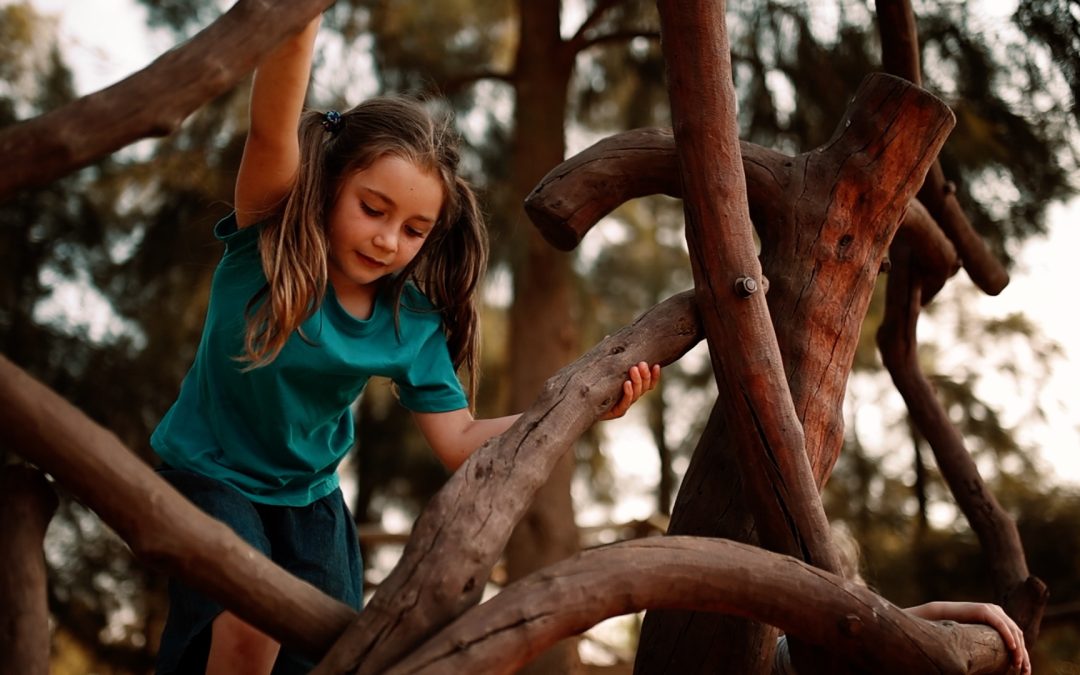
- Riding bicycles, climbing trees, and playing freely
- Building, baking, gardening, painting, storytelling, and singing
- Developing social skills, empathy, and confidence through group play and cooperation
These experiences are not a break from learning — they are learning. Neuroscience confirms that play is essential for brain development, and that movement, sensory exploration, and time in nature enhance memory, attention, and cognitive growth.
Reclaiming Childhood
We believe childhood is not a race — it is a sacred time of growth.
Children need time to be children. They need adults who understand development, who respect individuality, and who provide an environment where each child can flourish — not in comparison to others, but in their own time and in their own way.
Waldorf education is not about rejecting rigour — it’s about redefining it. Real rigour means deep engagement, resilience, and meaningful learning — none of which require a red pen or a test paper.
So let’s ask ourselves, as parents and educators:
What kind of childhood are we offering our children?
And what kind of learners — and humans — do we want them to become?
– Let’s choose less pressure.
– Let’s choose more play, more presence, and more possibility.