
Maths with Meaning: How Waldorf Education Builds Mathematical Confidence for Life
In many traditional school settings, mathematics is taught through repetition, memorisation, and an
early push into abstract problem-solving. But in Waldorf primary schools, the journey into
mathematics looks and feels very different—more human, more connected, and, crucially, more
effective in building lasting understanding.
This approach isn’t about avoiding rigour. It’s about timing, depth, and how children engage with
maths so that it becomes second nature—not something to be feared, but something to be
understood and even enjoyed.
Why the Waldorf Way Works
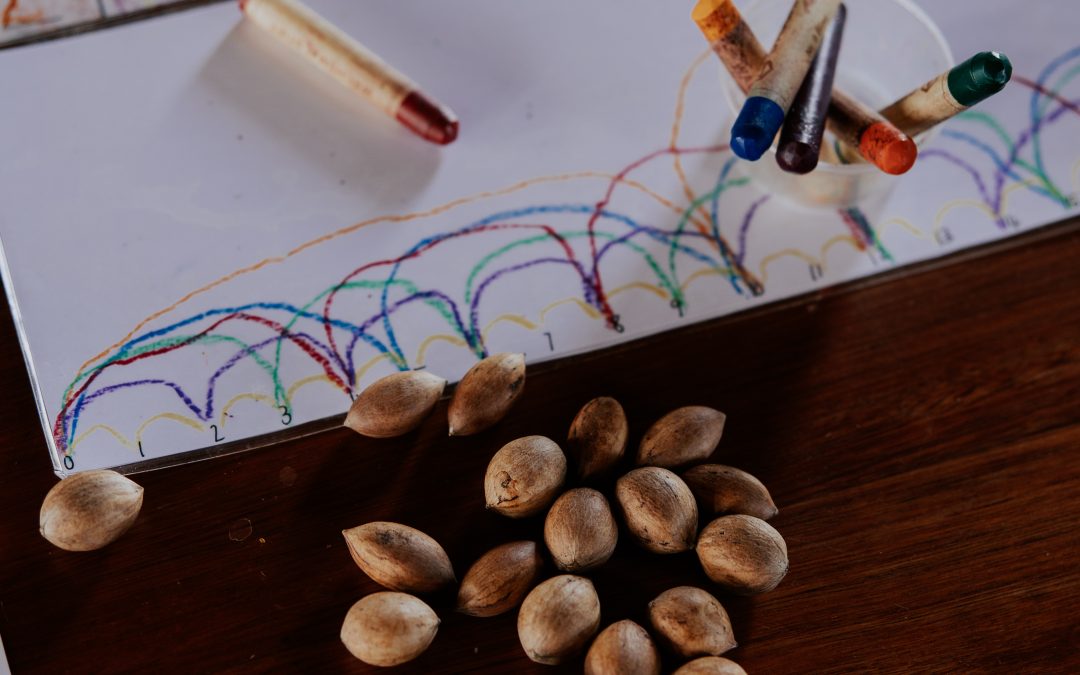
Waldorf maths begins with the child, not the textbook. Concepts are introduced in imaginative,
tangible ways: through movement, rhythm, storytelling, music, and drawing. Times tables are
learned with clapping and skipping; number relationships are explored through stories and form
drawing. Geometry is drawn by hand before it is ever measured. Children don’t just learn what
maths is—they see, feel, and do it.
Here’s why this makes a difference:
Deep Conceptual Understanding
Rather than memorising procedures, children in Waldorf schools are guided to understand why
maths works the way it does. This helps them move fluidly between topics, make connections across
concepts, and adapt when the problem changes—a skill that’s essential in high school and higher
education.
Problem-Solving & Critical Thinking
Waldorf education places a strong emphasis on independent thinking. Maths lessons often involve
open-ended problems, creative strategies, and reflective discussion. Pupils are taught to try, to fail,
and to try again—nurturing the resilience and flexibility that will carry them through more advanced
studies.
Strong Number Sense & Flexible Thinking
Instead of relying on one “correct” method, children are encouraged to explore many different
strategies for solving a problem. This develops intuitive number sense—an internal feel for how
numbers work together. It builds agility and confidence, both of which are critical in high school
when maths becomes more abstract and fast-paced.
A Natural Progression to Abstract Thinking
In Waldorf education, learning follows a child’s developmental stage. Early maths is hands-on and
imaginative. As the child grows, so too does the complexity—moving towards more abstract and
symbolic work in later grades. By high school, Waldorf students are prepared for algebra, geometry,
and calculus—not just because they’ve been taught the material, but because they understand it
deeply.
Engaging the Whole Child
Maths lessons in Waldorf schools involve movement, art, rhythm, and story—not as a gimmick, but
because these methods engage multiple areas of the brain and help embed knowledge more
securely. This approach also reduces maths anxiety, building a more positive and resilient mindset
towards the subject.
Why It Matters for the Road Ahead
The goal of Waldorf maths isn’t just to get children through the next test—it’s to prepare them for
high school, university, and life. By cultivating curiosity, understanding, and confidence, Waldorf
maths creates students who are not only capable, but also interested in the world of numbers,
patterns, and logic.
In an age where many students leave school thinking they “can’t do maths,” this approach offers
something different—and urgently needed: a maths education that builds both skill and self-belief.