More than 100 years ago, Austrian philosopher and educational pioneer Rudolf Steiner introduced a revolutionary approach to education—one that remains strikingly relevant today. At the heart of his vision was a simple but powerful idea: that education should nurture the whole child—head, heart and hands. Today, in an age dominated by screens, fast-paced living and test-driven schooling, Steiner’s insights feel more necessary than ever.
Education Beyond Standardisation
In most conventional education systems, the focus has shifted heavily towards standardised testing, early academic pressure, and narrowly defined success. But as the late Sir Ken Robinson, a leading advocate for creativity in education, famously said:
“One of the roles of education is to awaken and develop these powers of creativity. The arts aren’t just important because they improve maths scores. They’re important because they speak to parts of children’s being which are otherwise untouched.”
In many ways, Sir Ken echoed what Steiner advocated over a century ago: education must be human-centred, creative, and holistic. It must reach into the inner life of the child—not just fill them with information.
Waldorf Education: Where the Arts Are Central, Not Optional
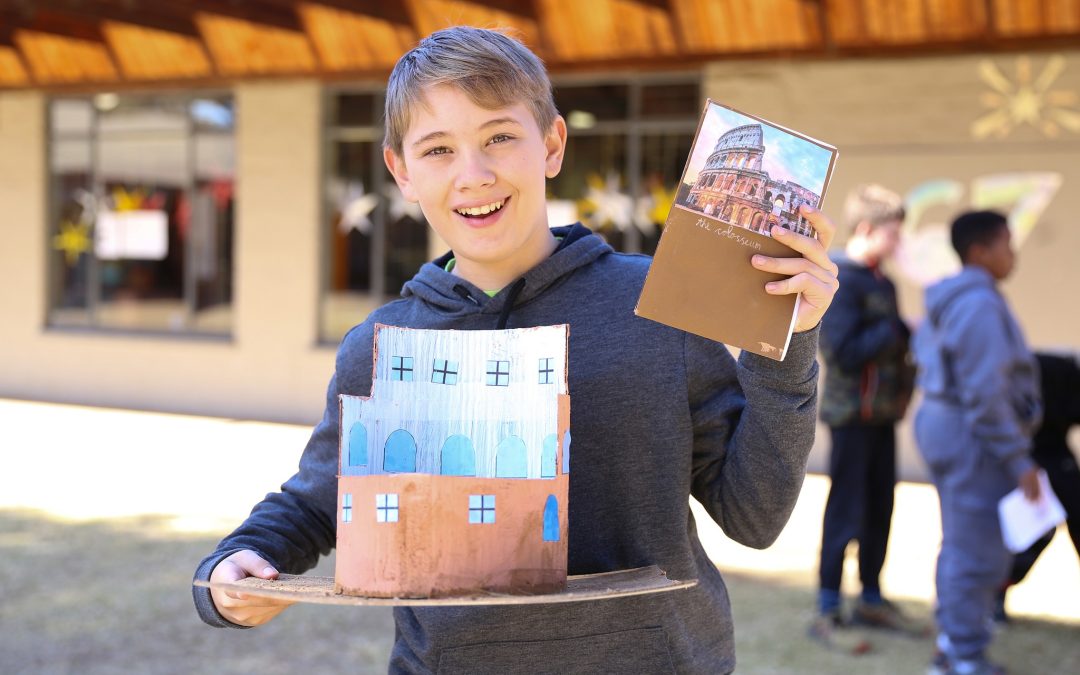
In Waldorf schools, the arts are not an “add-on”. They are woven into every subject and stage of development. Children paint, sing, sculpt, move, play musical instruments, act out stories, and engage in rhythmic activities—not just to become artists, but to become more deeply connected to learning and to life itself.
Research continues to confirm what Steiner understood instinctively: the arts develop emotional intelligence, improve memory, build confidence, and strengthen social bonds. They also spark curiosity, resilience and joy—qualities that cannot be measured by tests but are essential for lifelong learning and wellbeing.
Why It Starts in Kindergarten
In the early years, Waldorf education places particular emphasis on what is known as whole-body learning. At The Kindergarten at Rosemary Hill, children are not rushed into academics. Instead, they are encouraged to learn through movement, imagination, nature, and meaningful daily rhythms.
Activities like baking, drawing, free play, storytelling, climbing, singing, and watercolour painting are not seen as “extra”. They are the foundation of how children learn to concentrate, collaborate, communicate and care. These early experiences create strong neural pathways and healthy emotional patterns—laying the groundwork for formal learning when children are developmentally ready.
As Sir Ken Robinson explained:
“Creativity now is as important in education as literacy.”
And creativity flourishes when children are given time to play, explore, express and be themselves—especially in the earliest years.
A Global Example: Finland’s Balanced Approach
It’s no coincidence that Finland, one of the world’s top-performing education systems in maths, science and reading, also includes a strong focus on the arts, physical education and the humanities. Their approach mirrors Steiner’s century-old model: balance, breadth, and respect for the child as an individual.
In contrast to the pressure-driven models common in many countries, Finland—and Waldorf education—proves that nurturing creativity and wellbeing is not in opposition to academic achievement. In fact, it supports it.
Why Waldorf Still Makes Sense—100 Years Later
Rudolf Steiner’s philosophy was well ahead of his time. He recognised that human beings are not machines to be programmed but living, growing souls who thrive through meaningful relationships, creativity, beauty, and connection to the natural world.
A century later, his approach is still a breath of fresh air in the often overstimulated and overscheduled world of childhood. It reminds us that education is not just preparation for work—it is preparation for life.
Whether your child is finger-painting in kindergarten or writing poetry in upper primary, the Waldorf approach honours their individuality, rhythm and unfolding inner life—and that, more than ever, is what children need.
Watch this inspiring talk by Sir Ken Robinson, whose message so powerfully resonates with Waldorf principles:
Interested in learning more about Waldorf education in South Africa?
Visit our campus at Rosemary Hill Farm and experience for yourself why we say:
“Here, children have time to be children.”